US economics, inflation, jobs and the Fed
Value Line forecasts the U.S. economy to expand by 2.0% to 2.5% this year. The advance is likely to be driven, in part, by the astronomical spending on artificial intelligence (AI) infrastructure (i.e. data center construction). That, along with resurgent manufacturing activity, should help offset a modest decrease in the rate of personal consumption and weak residential construction.
The market received encouraging inflation news in July as both the Consumer Price Index (CPI) and Producer Price (PPI) came in below expectations, as inflation pressures moderated. A negative monthly CPI print effectively removed any concern about an immediate Federal Reserve rate hike according to Professor Siegel. Yet, as often happens, one positive development was quickly met by another challenge. Renewed conflict in the Middle East pushed crude oil back over $80 per barrel. If sustained, the conflict would keep retail gasoline prices elevated over the coming weeks and reverse part of the recent progress on inflation, particularly in August. Nevertheless, housing inflation provides a nice counterbalance to energy. Owner-equivalent rent and market rents are finally slowing in a meaningful way after remaining stubbornly elevated for much longer than expected by Professor Siegel. That moderation remains one of the most important contributors to keeping core inflation on a downward path. Assuming energy prices stabilize, the broader disinflation trend remains intact.
Global economy
Tariffs and energy sector shocks continue to buffet a macroeconomic landscape of solid growth, sticky inflation, and supportive policy stances. While the latest economic reports confirm that growth momentum is building, energy and trade shock headwinds reemerged. Crude oil prices touched above $100 per barrel in July and European natural gas prices surged, reflecting multiple choke points in global supply according to JP Morgan (JPM). The US administration also formalized a first round of section 301 tariffs in July, while threatening new levies on Canada, pharmaceutical products, and another round of 301 tariffs.
These developments tempered rather than altered JPM’s assessment that risks skewed upward around the bank’s forecast for modestly above-potential 2.5% annual rate (ar) growth in the second half of 2026. This July developed markets (DM) Purchasing Managers Index highlighted the building momentum, with the flash composite output index moving up 1.5% to its highest level since November 2025. Gains were recorded across the globe, with a notable 2% rise in the Euro area where surveys slid most sharply earlier this year. Strength in Asian industrial activity complemented this positive signal. A cooling in tech stocks has been more modest than anticipated while a pickup in non-tech activity has arrived on schedule.
JPM gauges the size of potential new drags from global trade and energy through their impact on financial conditions, business sentiment, and consumer spending. The past year’s tariff and energy shocks weighed on global hiring and Euro area sentiment. The risk of a turn towards business caution is limited now as corporates are supported by the recent surge in profits, a turn towards lean inventories, and structurally strong tech demand. In addition, the current shift in US trade policy is geared towards reversing what has been lowered by recent court cases.
While the position of the business sector is healthier than a year ago, consumer behavior is a greater source of uncertainty. Global consumption (ex. China) increased at a faster than 2%ar over the past year, despite a job stall and purchasing power squeeze. Remarkably, the latest indicators show global real goods accelerating to an estimated 4%ar in the three months through June. Whether sticky inflation derails this growth remains to be seen.
Stock market
Meanwhile, second-quarter profit growth for the S&P 500 companies likely exceeded 20% according to Value Line. The earnings gains were primarily driven by the technology sector, the result of the continued massive spending on AI. The profit surge is providing support for stocks at a time when concerns are increasing about the enormous debt used to fund the AI initiatives. The traditionally light-on-assets balance sheets of technology giants are reflecting more AI assets, while also adding debt.
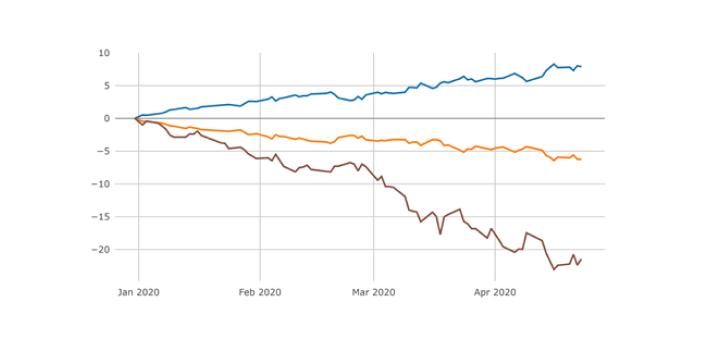
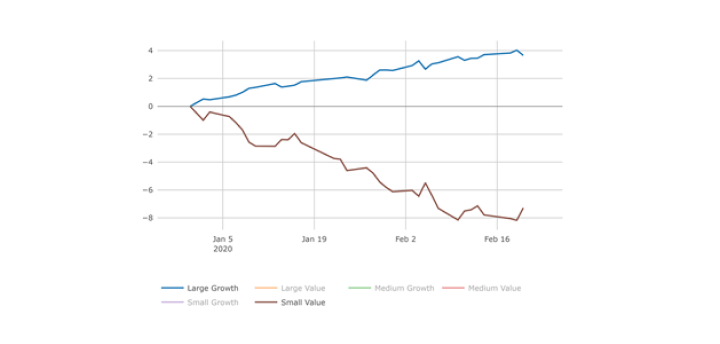
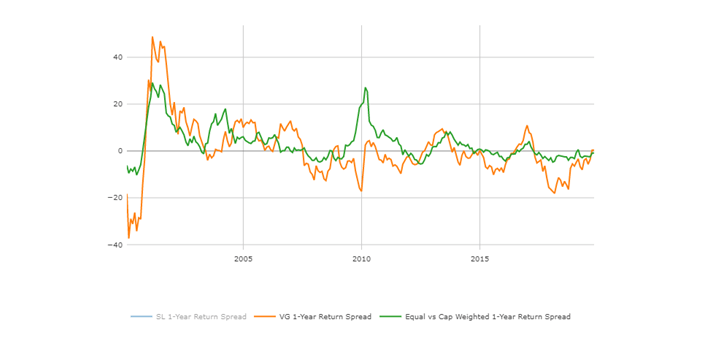
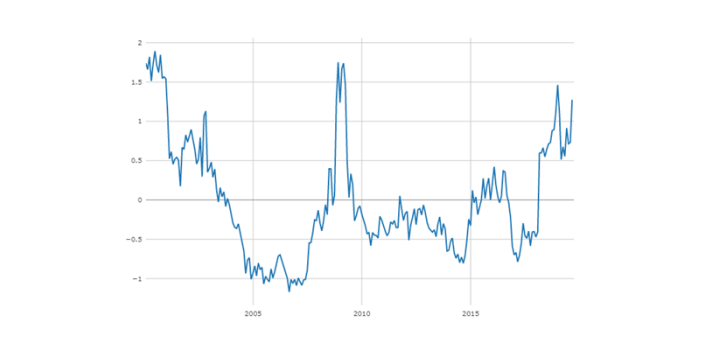
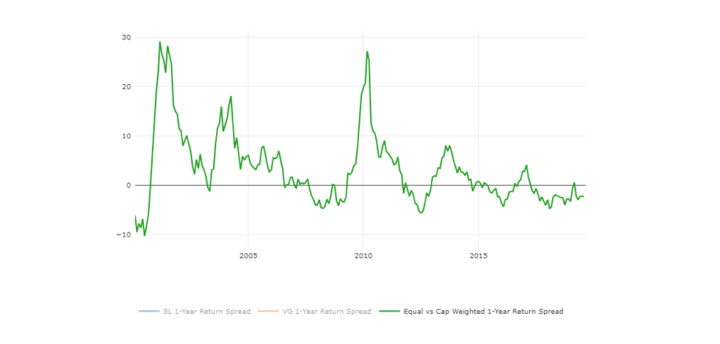
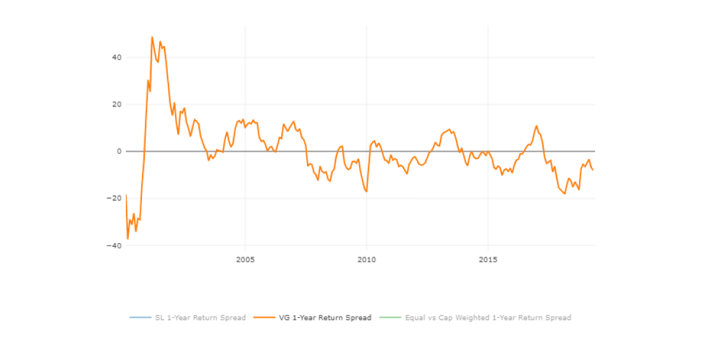
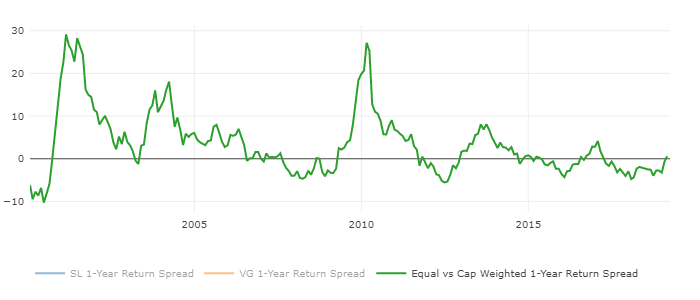
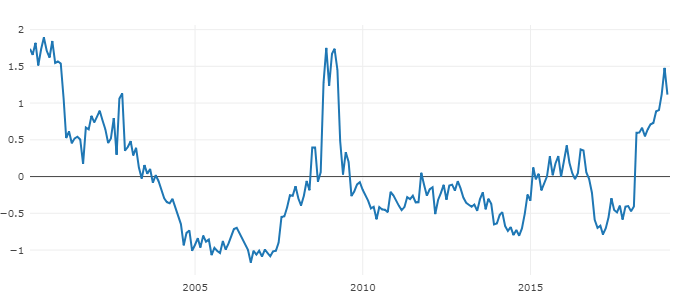
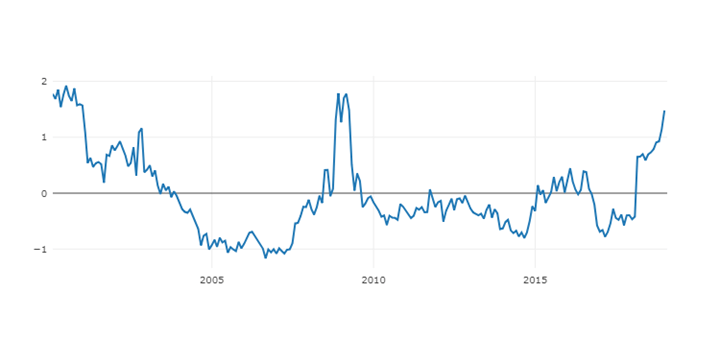
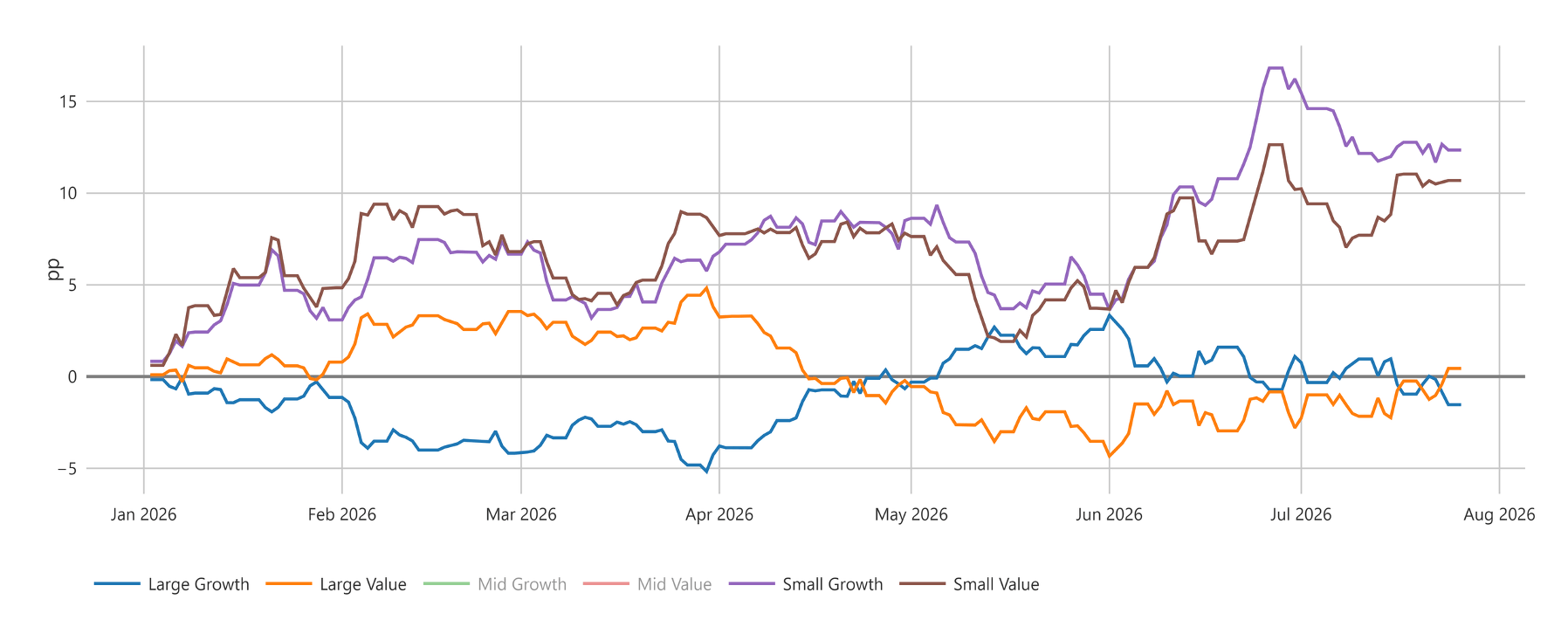
Regarding recent leadership change from Large Growth to Small and Value equities (see graph 1 below) Professor Siegel believes:
“The most visible development in financial markets has been the sharp rotation away from some of the highest-flying AI, memory and semiconductor stocks. This should not be viewed as a negative development. Quite the opposite. Healthy bull markets periodically correct excesses before they become dangerous bubbles. Investors are increasingly questioning whether extraordinary earnings growth alone justifies higher valuations. A doubling of earnings does not necessarily justify a doubling in a stock’s price unless those earnings continue indefinitely. Clearly, the appearance of the new Chinese AI model from Moonshot has shaken the market, and we will be following up on this development in coming weeks.
Importantly, this rotation should not be interpreted as a rejection of artificial intelligence. AI remains one of the most transformational technologies of our generation. The debate has simply shifted toward valuation, competition and ultimately how much computing power customers will be willing to purchase over time. Open-source AI models, increasing global competition and questions surrounding hyperscaler capital spending are introducing more discipline into the marketplace. That discipline is healthy. Some AI applications may become commoditized while others, particularly those capable of producing major scientific breakthroughs or blockbuster pharmaceuticals, could prove extraordinarily valuable.
The broader market stands to benefit from this leadership transition. Technology has become such a large percentage of major indexes that any meaningful rotation inevitably pressures headline averages. Yet many sectors outside of technology appear positioned to benefit from AI adoption without carrying the same demanding valuations. This has long supported the WisdomTree philosophy of maintaining valuation-sensitive index exposures rather than simply concentrating in the largest winners. The recent pullback in speculative AI leaders should be viewed less as the end of the bull market than as its maturation. Markets are becoming more discerning, valuations are becoming more rational, and leadership is broadening. That is precisely the type of rotation that extends – not ends – a long-term bull market.”
The information and opinions included in this document are for background purposes only, are not intended to be full or complete, and should not be viewed as an indication of future results. The information sources used in this letter are: WSJ.com, Jeremy Siegel, Ph.D. (Jeremysiegel.com), Goldman Sachs, J.P. Morgan, Empirical Research Partners, Value Line, BlackRock, Ned Davis Research, First Trust, Citi research, HSBC, and Nuveen.
IMPORTANT DISCLOSURE
Past performance may not be indicative of future results. Indexes are unmanaged and investors cannot invest directly in an index.
Different types of investments and investment strategies involve varying degrees of risk, and there can be no assurance that their future performance will be profitable, equal to any corresponding indicated historical performance level(s), be suitable for your portfolio or individual situation, or prove successful.
The statements made in this newsletter are, to the best of our ability and knowledge, accurate as of the date they were originally made. But due to various factors, including changing market conditions and/or applicable laws, the content may in the future no longer be reflective of current opinions or positions.
Any forward-looking statements, information, and opinions including descriptions of anticipated market changes and expectations of future activity contained in this newsletter are based upon reasonable estimates and assumptions. However, they are inherently uncertain, and actual events or results may differ materially from those reflected in the newsletter.
Nothing in this newsletter serves as the receipt of, or as a substitute for, personalized investment advice. Please remember to contact Signet Financial Management, LLC, if there are any changes in your personal or financial situation or investment objectives for the purpose of reviewing our previous recommendations and/or services. No portion of the newsletter content should be construed as legal, tax, or accounting advice.
A copy of Signet Financial Management, LLC’s current written disclosure statements discussing our advisory services, fees, investment advisory personnel, and operations are available upon request.
Investment advisory and financial planning services offered through Summit Financial, LLC., a SEC-Registered Investment Adviser, doing business as Signet Financial Management. The views and opinions expressed in this newsletter are solely those of the author and should not be attributed to Summit Financial, LLC., a SEC Registered Investment Adviser.