Key Takeaways
- August presented a mixed economic backdrop, as inflation remained above the Federal Reserve’s target, labor market conditions softened, and consumer confidence weakened, while underlying private-sector demand and corporate earnings remained resilient.
- Inflation showed mixed progress. July CPI eased to 3.4% year over year, while the Federal Reserve’s preferred PCE measure remained elevated at 3.7%, reinforcing an uneven path toward price stability.
- Labor market conditions softened as nonfarm payrolls declined by 23,000 in July and labor-force participation fell to 61.4%. Wage growth slowed to its weakest pace of 2026 and remained slightly below inflation.
- Real GDP grew at a 1.5% annualized rate in Q2, down from 2.1% in Q1, although real final sales to private domestic purchasers increased 4.2%, suggesting underlying consumer and business demand remained stronger than the headline figure implied.
- Consumer confidence weakened in August, with the University of Michigan sentiment index falling to 51.7 and the Conference Board index declining to 89.4 as households remained concerned about inflation, affordability, and the economic outlook.
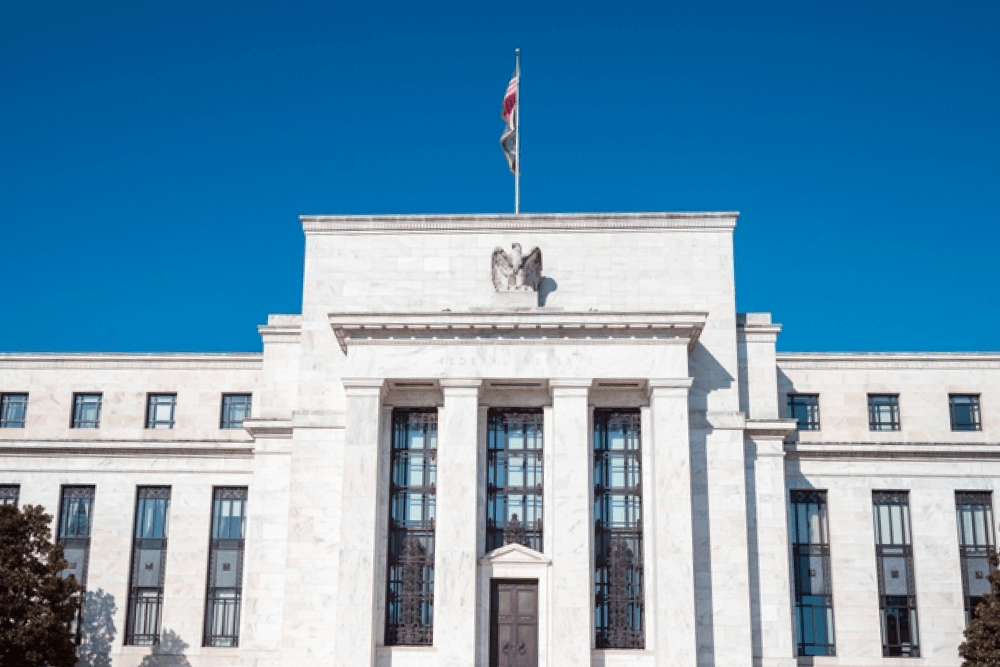
- With no scheduled policy meeting in August, Chair Kevin Warsh’s hawkish Jackson Hole remarks became the month’s most important Federal Reserve signal, prompting markets to price a September rate increase as more likely than not.
- Treasury yields were highly volatile during August. Yields initially declined following weak employment data and expanded Treasury buyback plans but reversed sharply higher after Jackson Hole and renewed U.S.-Iran tensions. The 10-year Treasury yield ended August near 4.75%, while the 30-year briefly reached 5.34%, its highest level since 2007.
- The U.S. national debt surpassed $40 trillion during August, reinforcing concerns surrounding federal deficits, Treasury issuance, and long-term borrowing costs.
- U.S.-Canada trade tensions escalated after negotiations collapsed, with both countries announcing significant new tariff measures. While additional negotiations could still alter the outcome, the dispute has increased concerns about inflation, supply chains, and broader North American trade relations.
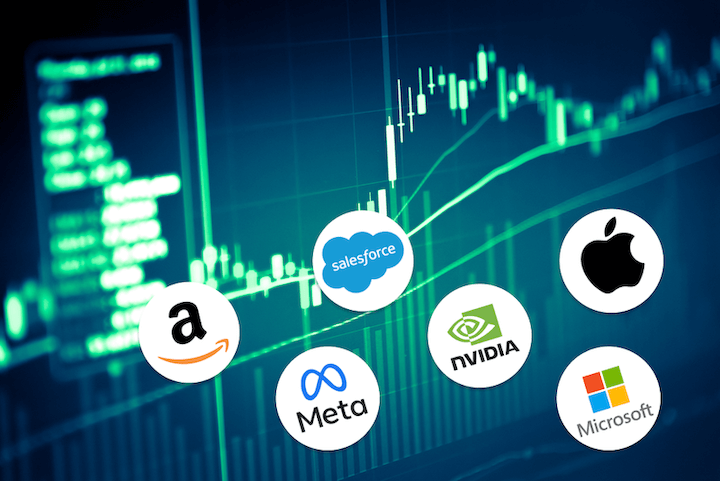
- U.S. equities advanced as strong corporate earnings and renewed enthusiasm surrounding artificial intelligence offset pressure from rising interest rates. Technology and software companies led the late-month rally after several prominent firms reported strong results and guidance.
- International equity performance was positive but uneven, with emerging markets and Japan outperforming while European and Hong Kong markets were more subdued, reflecting diverging growth, currency, and policy trends.
- Commodities strengthened amid geopolitical uncertainty, inflation concerns, and supply constraints. Gold gained approximately 9.7%, copper rose about 3.7%, and oil prices experienced substantial intramonth volatility as investors monitored developments involving Iran and the Strait of Hormuz.
- Overall, August demonstrated that markets remain supported by resilient private-sector demand and strong corporate earnings but increasingly sensitive to elevated inflation, higher long-term interest rates, fiscal concerns, trade tensions, and geopolitical risk. Maintaining a disciplined and diversified approach remains particularly important as investors assess whether economic resilience can continue to offset a more restrictive policy environment.
IMPORTANT DISCLOSURE
Past performance may not be indicative of future results. Indexes are unmanaged and investors cannot invest directly in an index. Diversification does not assure a profit or protect against loss.
Different types of investments and investment strategies involve varying degrees of risk, and there can be no assurance that their future performance will be profitable, equal to any corresponding indicated historical performance level(s), be suitable for your portfolio or individual situation, or prove successful.
The statements made in this newsletter are, to the best of our ability and knowledge, accurate as of the date they were originally made. But due to various factors, including changing market conditions and/or applicable laws, the content may in the future no longer be reflective of current opinions or positions.
Any forward-looking statements, information, and opinions including descriptions of anticipated market changes and expectations of future activity contained in this newsletter are based upon reasonable estimates and assumptions. However, they are inherently uncertain, and actual events or results may differ materially from those reflected in the newsletter.
Nothing in this newsletter serves as the receipt of, or as a substitute for, personalized investment advice. Please remember to contact Signet Financial Management, LLC, if there are any changes in your personal or financial situation or investment objectives for the purpose of reviewing our previous recommendations and/or services. No portion of the newsletter content should be construed as legal, tax, or accounting advice.
A copy of Signet Financial Management, LLC’s current written disclosure statements discussing our advisory services, fees, investment advisory personnel, and operations are available upon request.
Investment advisory and financial planning services offered through Summit Financial, LLC., a SEC-Registered Investment Adviser, doing business as Signet Financial Management. The views and opinions expressed in this newsletter are solely those of the author and should not be attributed to Summit Financial, LLC., a SEC Registered Investment Adviser.